

Turntable RPM Explained: Why 33 or 45 RPM Matter
Quick Answer
RPM = revolutions per minute. 33⅓ RPM is the standard for full-size LPs (20+ min/side). 45 RPM offers superior sound quality with wider groove spacing but only 10–12 min/side. Always match your turntable speed to the record label — wrong speed won't damage vinyl but sounds terrible.
Quick Navigation
Turntable RPM Explained: Why 33 or 45 RPM Matter
RPM — revolutions per minute — measures how fast your turntable's platter spins. It's the fundamental specification that determines how your music sounds. Records at 33⅓ RPM complete that many rotations per 60 seconds, while 45 RPM records complete 45 rotations in the same timeframe. The stylus follows the groove spiral, with faster rotation encoding higher frequencies more accurately.
And this isn't some niche concern. The vinyl market hit $1.04 billion in US wholesale revenue in 2025, with 46.8 million units sold — outselling CDs three to one for the first time in decades. Across the Atlantic, the UK moved 7.6 million LPs worth £174.7 million, and Germany remains the only major market where vinyl is still the one physical format growing. Every single one of those records spins at a specific RPM, and understanding why matters more than most guides will tell you.
The History of Turntable Speeds
78 RPM Era (1920s–1950s) — The original standard used shellac records offering 3–4 minutes per side. These fragile discs delivered high fidelity for their era but required constant flipping and careful handling.
The Vinyl Revolution (1948) — Columbia introduced 33⅓ RPM LPs, achieving 20+ minutes per side on a single platter. This enabled complete albums without constant interruption and fundamentally changed how music was consumed. It's the reason we have "albums" as an art form — before the LP, musicians could only think in 3-minute segments.
45 RPM Singles (1949) — RCA's competing format optimized for pop and rock singles. More durable than 78s, with superior sound quality for shorter recordings. The 33⅓ standard won the format war because it solved the fundamental problem of fitting complete albums without constant flipping.
Technical Differences: 33 vs 45 RPM
Groove density differs fundamentally between speeds. At 33⅓ RPM, the stylus travels roughly 50 cm/second through compressed grooves. At 45 RPM, it travels approximately 68 cm/second through wider-spaced grooves, allowing better high-frequency tracking and lower treble distortion (0.1–0.5% versus 0.5–2% at 33⅓).
The trade-off: 45 RPM 12-inch albums hold only 10–12 minutes per side, versus 20–23 minutes at 33⅓ RPM. You get better sound but need more disc changes. For audiophiles, this trade-off is worth it — the difference in high-frequency detail is audible even on mid-range systems.
Here's a detail most RPM guides skip: the inner grooves of a 33⅓ LP suffer measurably worse distortion than the outer grooves, because the stylus velocity decreases as the groove spiral tightens toward the label. At 45 RPM, this inner-groove distortion is dramatically reduced. That's why the last tracks on a 33⅓ LP often sound slightly muddier than the first — it's physics, not imagination.
Why Speed Accuracy Matters
Beyond choosing RPM, your turntable must maintain consistent speed. Two measurements determine quality:
- Wow: Slow pitch fluctuations — acceptable below 0.15%
- Flutter: Rapid speed variations — acceptable below 0.3%
Even pristine 45 RPM pressings sound mediocre on unstable turntables. If you hear pitch wavering during sustained piano notes or vocals, your turntable's speed regulation needs attention. Belt-drive turntables are more susceptible to wow; direct-drive models handle flutter better.
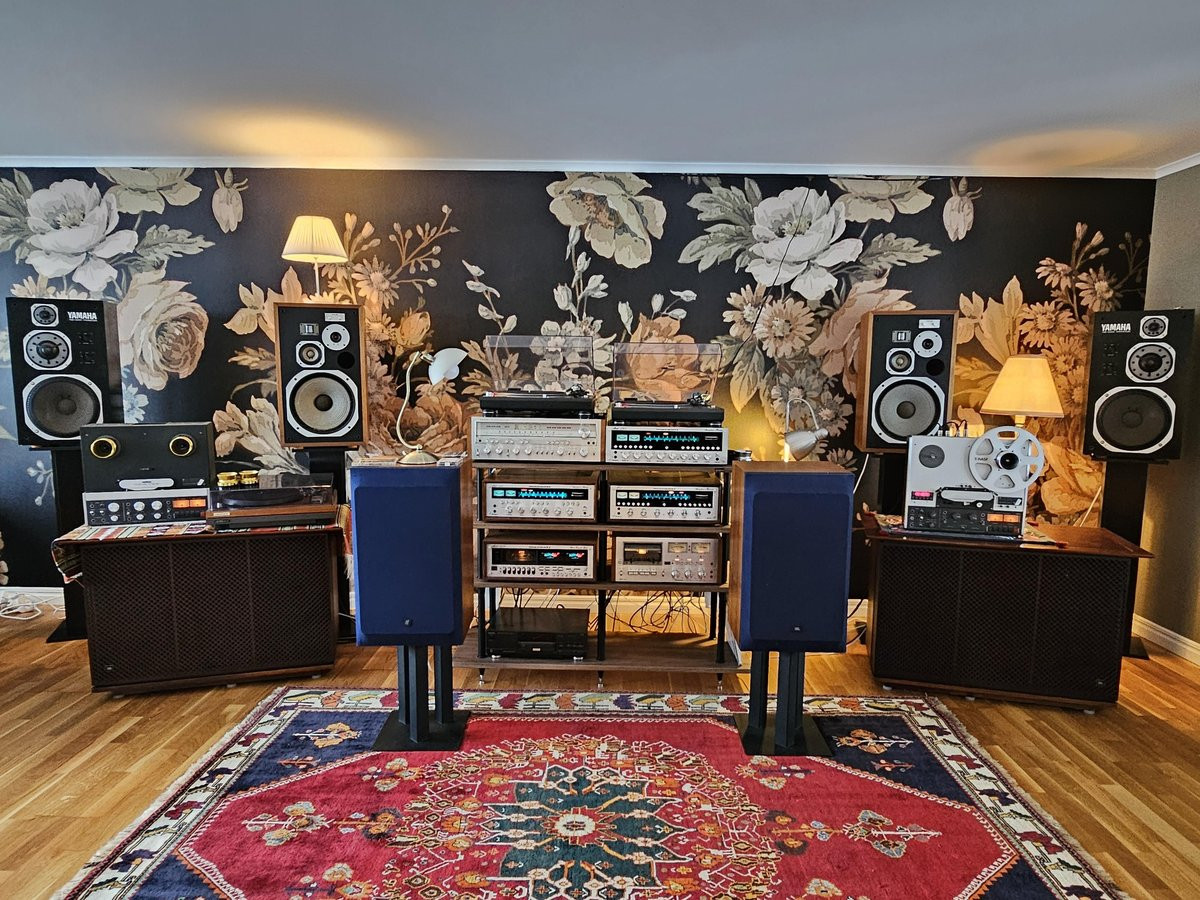
And your turntable's surface matters more than you'd think. A wobbly shelf or a hollow IKEA Kallax introduces micro-vibrations that feed back through the stylus, adding wow and flutter that no amount of calibration can fix. Purpose-built turntable furniture with solid wood construction — like the Digger's Stack — provides the mass and vibration dampening that precision playback demands. It's the difference between reading about specs and actually hearing them.
Modern Audiophile 45 RPM Pressings
High-end 45 RPM 12-inch reissues cost $80–$150 but reveal nuances that 33⅓ simply cannot match — especially for classical, jazz, and orchestral listening. These split albums across 4 sides (2 records) to maintain fidelity while covering the full tracklist.
For most collectors, 33⅓ remains the practical standard. But if you're chasing the absolute best sound from vinyl and don't mind the extra disc handling, 45 RPM pressings on 12-inch vinyl represent the peak of analog audio quality. Labels like Mobile Fidelity, Analogue Productions, and Speakers Corner have built entire catalogs around this concept.
The Vinyl Market and RPM Choices
The resurgence isn't just about nostalgia. A 2025 Gen Z Vinyl Alliance study found that 76% of Gen Z vinyl buyers purchase records monthly, and 50% describe vinyl as a "break from digital life." Interesting stat: 40% of US vinyl buyers don't even own a turntable — vinyl has become an identity signal and aesthetic object as much as a listening format.
But for the 80% who do own a record player, understanding RPM isn't optional — it's the first thing you set before dropping the needle. The average Discogs collection sits at 195 records. That's roughly 50–80 kg of vinyl that needs proper storage, and every single disc in that collection has an RPM printed on the label that determines how it should be played.
Frequently Asked Questions
What RPM should I set my turntable to?
Match the RPM to your record. Most full-size LPs play at 33⅓ RPM. 7-inch singles typically play at 45 RPM. Some 12-inch singles and audiophile pressings also use 45 RPM — always check the label.
Does 45 RPM really sound better than 33?
Yes, technically. The wider groove spacing allows more detail and less distortion (0.1–0.5% THD vs 0.5–2% at 33⅓). But the difference is most noticeable on high-quality pressings played through good equipment. On a budget setup, you probably won't hear it.
Can playing a record at the wrong speed damage it?
No permanent damage, but it sounds terrible. Playing a 33 at 45 speeds everything up like chipmunks; playing a 45 at 33 slows it down to a groaning crawl. Always match the correct speed to the record label.
How do I know if my turntable speed is accurate?
Use a strobe disc (included with many turntables) or a smartphone RPM app. Under 50/60Hz light, consistent dots on the strobe indicate correct speed. If the dots drift, your platter speed needs adjustment — check your belt tension or pitch control.
Why do audiophile reissues use 45 RPM instead of 33?
Because the wider groove spacing at 45 RPM captures more musical detail with less distortion — especially in the high frequencies. Labels like Mobile Fidelity and Analogue Productions split albums across 2 discs (4 sides) to get the full tracklist at 45 RPM quality. It costs more and requires more disc handling, but the sound improvement is measurable and audible.
Protect & Store Your Collection
KTS Turntable Mat · The Digger's Stack · Turntable Stands & Furniture
Explore Our Guides
Turntable Stand Guide 2026 · Complete Vinyl Setup Guide 2026
Keep Reading
How Does a Vinyl Record Work? · Parts of a Turntable Explained · Why Is My Vinyl Skipping?