Best Vinyl Record Racks & Shelves of 2026: Modular Systems Compared
Updated July 2026
Kallax shelves are rated for 13 kg — your 200 LPs weigh 25–30 kg. Wall brackets sag. DIY solid wood shelves bow at the center. Here are the racks and shelves built for the real weight of vinyl.
- Solid wood
- Modular & stackable
- Free worldwide shipping
- 30-day returns

Key takeaways
- Kallax is overloaded by design. IKEA rates each shelf for 13 kg. A full cube of 80 LPs weighs 16–18 kg.
- Wall brackets pull from drywall. Vinyl weight × shelf length compounds. Anchor into studs or use a full-rack system.
- Modular > fixed grids. Stack, side-by-side, wall-mount — your collection grows, your storage should too.
- Weight scales fast. 100 LPs ≈ 12–15 kg · 200 LPs ≈ 25–30 kg · 500 LPs ≈ 65–75 kg · 1,000 LPs ≈ 130–150 kg.
- Solid wood beats MDF. solid wood handle real vinyl load without sag or off-gassing.
Vinyl record collecting seems intimidating if you're coming from streaming. Prices, condition grades, pressings, original releases—there's a lot of vocabulary. But the fundamentals are simple: you find records you want to hear, you buy them, you listen to them. Everything else is refinement.
If your records are stacking on the floor or the IKEA shelf is sagging, this is for you. Built for serious collectors who want the storage to last as long as the vinyl does.
I started collecting by accident. I found a turntable at a flea market for twenty dollars and decided to see if it worked. It did. I bought one record to test it. Then another. Three months later I had 200 records and was reading obscure discographies at midnight.
Racks vs. Modular: Know the Difference
Traditional record racks hold a fixed number of records in a fixed footprint. Modular systems grow with your collection. At 200 records (50-80 kg), a rack is full; modular storage simply adds another unit. The average Discogs collection is 195 records but growing, and 76% of Gen Z buy monthly. Choosing modular means choosing a solution for your entire collecting journey.
I'm going to break down what actually matters for someone starting their first collection, and where most new collectors waste money.
What You Actually Need
Let's be clear about this: you need four things.

Flying Vinyl wall-mounted record display showing album covers — Shop now
- A turntable: The thing that plays records. $150-300 gets you something reliable. You can find used turntables much cheaper, but budget for a cartridge replacement ($50-100) because the one installed might be worn out.
- Speakers: Either powered speakers ($100-200) or a receiver/passive speakers. Powered speakers are simpler for beginners.
- Records: The actual music.
- A stylus (needle): The part that reads the record. It wears out every 1000 hours, so budget for replacement ($30-50).
That's it. Everything else—record sleeves, storage furniture, cleaning equipment—is optional until you have a collection that justifies the investment. Explore our vinyl storage unit guide for curated recommendations.
Where to Find Records
Where to buy records (and what to pay)
Record stores: Your best source for new vinyl, and staff usually know what they're recommending. Expect to pay $15-20 per record for new releases.
Online (Discogs, eBay, Amazon): Wider selection, but you're buying blind unless there are photos. Prices vary wildly. Budget 15-30% extra for shipping because records are heavy.
Thrift stores and flea markets: Best prices ($0.50-3 per record), but quality is inconsistent. Bring a magnifying glass to check for warps and large scratches before buying. Not all records are playable.
Key takeaway:
Record stores: Your best source for new vinyl, and staff usually know what they're recommending.
Estate sales: Often include entire collections. Can get vintage records cheap ($2-5 each), but you're buying a lot at once. Quality varies by previous owner.
Don't buy records from big box retailers (Walmart, Target) unless it's the exact album you want. Record stores have better selection and staff knowledge. For a deeper look, check out our vinyl record box options.
Recommended Solution
Vinyl Modular x4 (200 LPs)
Stackable solid-wood modules. Start with one cube, expand as your collection grows.

Understanding Pressing and Condition Grades
Pressing: A "pressing" is a version of an album pressed at a specific factory during a specific time period. Different pressings sound different—sometimes dramatically. A first pressing of a 1970s album will sound different than a 2010 reissue from the same mastering.

The Digger's Wall vinyl record display shelf on a living room wall — Shop now
When you see "original pressing" or "first pressing," that just means it's from the initial release. "Reissue" means it was pressed later. Neither is inherently better—it depends on the mastering and the vinyl quality. Sometimes a reissue is better because they used superior equipment.
Condition grades: Sellers use standardized grades:
- Mint (M): Unplayed, perfect condition. You almost never see this.
- Near Mint (NM): Looks and sounds like new. Light surface noise only. $15-30 for typical albums.
- Very Good Plus (VG+): Minor cosmetic issues, some surface noise. $8-15 for typical albums.
- Very Good (VG): Visible wear, surface noise present but not overwhelming. $4-8.
- Good (G): Heavy wear, significant surface noise. Still playable. $1-4.
- Fair (F): Very heavy wear, audible pops and scratches. Playable but not pleasant.
- Poor (P): Severe damage. Probably don't buy this.
For beginning collectors, buy VG+ or better if paying more than $5. Below that, condition matters less because you're getting a cheap record anyway.
Common Beginner Mistakes
Beginner mistakes to skip
Mistake 1: Spending too much on first turntable. You don't know if you'll stick with collecting. Get a $150-200 turntable, a $150 pair of powered speakers, and thirty $10 records. Total: ~$600. If you love it after six months, upgrade then.
Mistake 2: Buying expensive records before knowing what you like. Don't hunt down rare pressings of albums you've never heard. Buy popular releases first, figure out what you enjoy, then hunt specific variants later.
Mistake 3: Ignoring condition. A record that looks clean might have mold damage or deep scratches you can't see. Check the groove—if it looks dull or discolored, skip it.
Key takeaway:
You don't know if you'll stick with collecting.
Mistake 4: Storing records horizontally. Vinyl is heavy. Stacking records horizontally warps them. Store vertically like books.
Mistake 5: Assuming old = better. A 1970s first pressing might sound worse than a 2015 remaster. Equipment and mastering have improved. Don't pay premium prices just for age.
Recommended Solution
Vinyl Modular x4 (200 LPs)
Stackable solid-wood modules. Start with one cube, expand as your collection grows.
Building Your First Collection

How to grow your collection on purpose
Start with albums you already love. If you have a favorite artist, buy their entire discography on vinyl. You'll learn which albums you actually replay and which ones sit untouched.
Don't try to be a completist. Collectors often get trapped in chasing every variant of every pressing. You don't need the original first pressing of every album you own. You need records you actually play.
Set a budget: $20-30 per month is manageable for most people. That's 2-3 records a month. After a year you'll have 30 records and a sense of what you like.
Key takeaway:
If you have a favorite artist, buy their entire discography on vinyl.
Keep records you don't like. Trading them later is rarely worth it because shipping costs eat your profit. But also don't feel obligated to keep records you don't enjoy just because they're old or rare. Vinyl collecting should be fun, not stressful.
Recommended Solution
Vinyl Modular x4 (200 LPs)
Stackable solid-wood modules. Start with one cube, expand as your collection grows.
The Bottom Line
Vinyl collecting as a beginner is simple: buy a turntable, get speakers, find records you like, and listen to them. Everything else—condition grades, pressing variants, rare finds—is optional refinement that you'll naturally explore as you get deeper into it.
Start small, buy what you like, and expand from there. That's it.
Buy What You Like
Start with albums you already enjoy rather than hunting rare variants.
Check Condition
Inspect vinyl before buying to avoid records with mold or deep scratches.
Store Vertically
Keep records standing upright like books to prevent warping.
Budget Wisely

Spend $20-30 monthly on records you'll actually play.
Related Articles
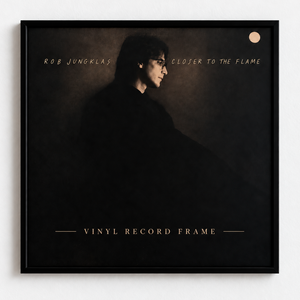
Turn your favorite albums into wall art
See Wall Mounts
For a complete overview of every storage type, read our complete vinyl storage guide guide.
Related Reading
Looking for the right storage solution?
The Vinyl Modular x4 holds 200+ LPs in solid wood — modular, stackable, and designed for growing collections. Browse all storage solutions →
Continue exploring
Album Art Belongs on Display.
Wall mounts and steel stands that showcase your collection as art. Solid wood, easy install.
Shop Wall Mounts →Vinyl Break StandExplore more: complete Vinyl Record Shelf Guide.
KTS Modular vs IKEA Kallax vs Wall-Mount Brackets vs DIY solid wood Shelf
| Feature | KTS Modular | IKEA Kallax | Wall Brackets | DIY solid wood Shelf |
|---|---|---|---|---|
| Material | Solid wood | Particle board | Steel + drywall | solid wood (varies) |
| Load capacity | 25 kg per cube tested | 13 kg/shelf | Stud-dependent | Bows mid-span |
| Modular / stack | Yes — engineered | Fixed grid | Add brackets | No |
| Aesthetic | Showroom quality | Generic | Industrial | DIY look |
| Lifespan | Decades | 2–5 yrs | Wood-dependent | Decades if built right |
Built for the real weight of vinyl
KTS solid-wood storage is engineered to hold 200, 500, or 1,000+ LPs without sagging. Modular, stackable, designed in Spain.
See the Modular systemCommon questions
Frequently Asked Questions
Can IKEA Kallax hold the weight of a full record collection?
No. IKEA rates each Kallax shelf for 13 kg max. A single cube fully loaded with 80–90 records weighs 16–18 kg — you're overloading the shelf by 25–40% from day one.
How much does a collection of 100, 500, or 1,000 records weigh?
Based on standard 120–150 g records: 100 LPs ≈ 12–15 kg, 200 LPs ≈ 25–30 kg, 500 LPs ≈ 65–75 kg, 1,000 LPs ≈ 130–150 kg. Audiophile 180–220 g pressings weigh ~25% more.
Is solid wood strong enough for heavy records?
Yes. has one of the best strength-to-weight ratios of any timber — nicknamed "the aluminium of wood." High dimensional stability, low shrinkage, excellent load resistance.
How do you display vinyl records on a wall?
Does displaying vinyl records damage them?
Continue exploring
Find your perfect setup


Racks & shelves engineered for vinyl
Modular solid-wood racks and shelves — stack from one cube to a full wall. Made in Spain. Free worldwide shipping.
Sources & further reading
- Library of Congress — Care, Handling, and Storage of Audio Visual Materials (store discs upright; ~35–40% RH for home collections; grooved discs average 35+ lb per shelf-foot).
- U.S. National Archives — Audio Guidance: Condition of Materials and Storage (shelve LPs vertically; cool, low-humidity environment).
- Discogs — How to Store Vinyl Records (shelving must support ~35 lb per shelf-foot; choose wood over metal).
In stock · ships in 24–48 h
Accessories for your collection, ready to ship today.