Vinyl specs · 2026 reference
Vinyl record sizes — 7", 10", 12" complete specs
Diameter, weight, runtime, RPM. Every standard format. Plus what the dimensions mean for your storage.
3 standard formats · 1 reference
From the 7" single to the 12" LP. Diameter, RPM, runtime, weight — all the dimensions that determine the shelf your collection needs.

Short answer: what are the standard vinyl record sizes?
There are three: the 12" LP (about 30 cm, 33⅓ RPM, about 22 minutes per side), the 10" EP (about 25 cm, 33⅓ or 45 RPM, 12–15 minutes) and the 7" single (about 17.5 cm, 45 RPM, 4–5 minutes). Speed does not define size: 12" maxi-singles spin at 45 RPM. A 12" disc weighs 140–180 g on its own and 230–270 g with jacket and inner sleeve, which is what your shelf actually carries.
Vinyl sizes — 3 standard formats compared
The 12" LP — modern standard
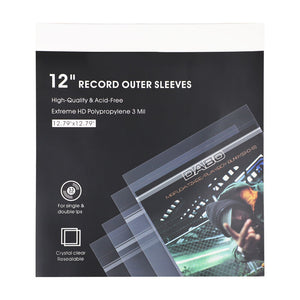
The 12-inch LP is the most common format in modern vinyl collections. The record itself measures about 30 cm (nominally 12 in) in diameter and spins at 33⅓ RPM, giving you approximately 22 minutes of runtime per side. In its cardboard jacket, the package is approximately 12.375 × 12.375 inches (31.43 × 31.43 cm). A gatefold cover adds width: expect 12.5 × 25 inches (31.75 × 63.5 cm) when fully opened. The standard outer protective sleeve runs 12.75 × 12.75 inches (32.4 × 32.4 cm).

The 7" single — singles era survivor
The 7-inch single measures about 17.5 cm (nominally 7 in) in diameter, spins at 45 RPM, and holds about 4–5 minutes per side. Sleeve dimensions: approximately 7.25 × 7.25 inches (18.4 × 18.4 cm). The format dominated the 1950s–70s singles era and still gets limited pressings every Record Store Day.

The 10" EP and 12" Maxi-single — the in-between formats
The 10-inch record was the usual size of the 78 RPM era, largely abandoned in the 1950s for the 12" LP and the 7" single but revived for special editions. Today it measures about 25 cm (nominally 10 in), runs at 33⅓ or 45 RPM, and holds 12–15 minutes per side.
The 12-inch Maxi-single is a different beast: same physical size as an LP but spinning at 45 RPM. The faster speed sacrifices runtime (10 to 15 min per side) for sound quality — wider grooves mean better dynamic range and frequency response. Audiophile labels like Mobile Fidelity and Analogue Productions release 45 RPM editions of classic albums, spread over two discs.
Why dimensions determine your shelf
Every millimeter of shelf depth matters. Minimum 33 cm internal depth for 12" LPs with outer sleeves. Many bookcases are only around 28 cm deep, so records stick out the front, unprotected. A closed gatefold is the same size as a single jacket, only thicker: it takes more shelf width, not more depth. By the end of 2025, Discogs users had catalogued more than 920 million items, with an average collection of 191 items (Discogs data reported by Goldmine). If those were all LPs, that is about 48 kg on the shelf. KTS solid wood cubes are validated at 23–25 kg per cube in our own load test.
How much does a vinyl collection actually weigh?
Per LP with jacket and inner sleeve: about 230–270 g (the disc alone is 120–180 g). Gatefolds and box sets weigh more.
Frequently asked questions
What are the standard vinyl record sizes?
How much does a 12" LP weigh?
What's the difference between an LP and an EP?
Why do some 12" records play at 45 RPM?
What shelf depth fits 12" LPs?
Storage that fits every standard format.
Solid wood cubes sized for the 12" sleeve, with 34 cm internal depth. Each cube validated at 23–25 kg in our own load test. Built for the real dimensions of vinyl.
Free download: Vinyl Size & Sleeve Chart
Two printable pages, no email needed: every format with its sleeve size, the shelf clearance each one needs, how many records fit per shelf width, which sleeves to use and what a collection weighs.
Download the PDF (free)In stock · ships in 24–48 h
Accessories for your collection, ready to ship today.